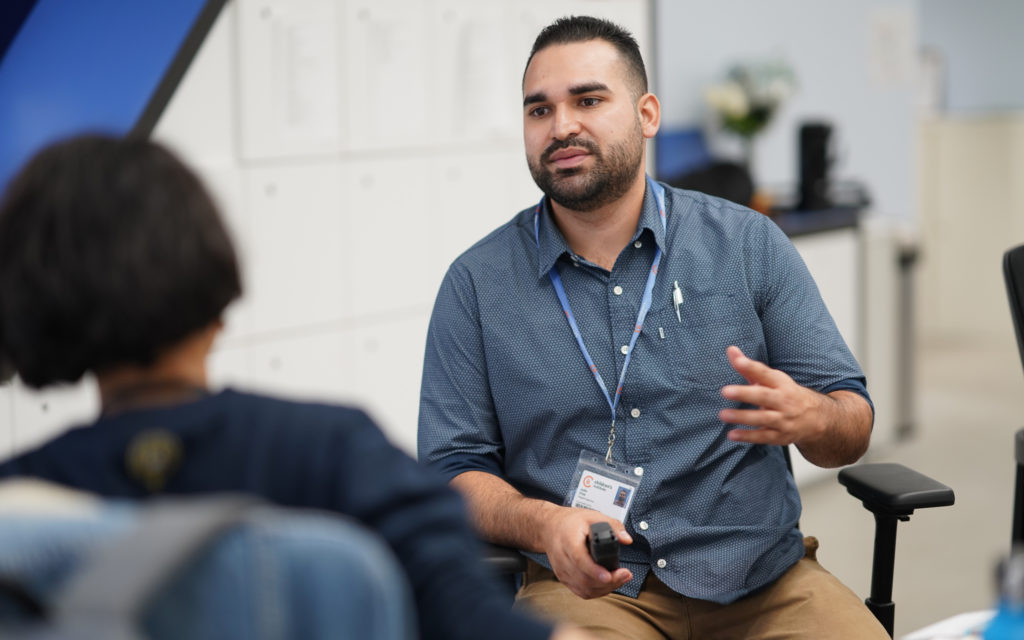
Over the past five years, Children’s Institute has embraced “reflective practice” – literally, the ability to step back and reflect on your own experiences to improve the way you work. At CII, reflective practice is incorporated both in clinical supervision and in supervision with teachers and home visitors.
Jesús Parra, Vice President of Behavioral Health & Wellness at CII, said reflective practice improves the level of care staff provide while also preventing burnout. According to Parra, people working in human service may get caught up in the moment of caring for families and lose sight of the bigger picture, which is why it is important to build in a pause mechanism, especially when work gets chaotic. Reflective practice allows supervisors to help staff reflect on their interactions with families after the fact, and also to use reflection in their sessions.
“This isn’t just about thoughts and feelings,” Parra said. “In reflective practice, staff and supervisors slow down to see if additional resources can help, including bringing in new expertise.”
While reflective practice has been part of the human services field for more than three decades, its value has become increasingly important during the COVID-19 crisis, with people stuck at home for many months.

Desiree Yoro Yoo is the Director of Project ABC and has more than 10 years of training in reflective practice. She said the whole concept focuses on keeping clients, staff and supervisors in a place of calm where they can continue making thoughtful decisions. If done correctly, people will stay mindful regardless of external events.
“The most important part about reflective practice is creating safety through emotional support, which remains true for this current crisis,” Yoro Yoo said.
Nancy Watt is a Home Visitation Program Manager at CII and uses reflective practice regularly with her team; when workers are feeling stretched or rejected reflective practice can help keep things in perspective. Home visitors usually go into the homes of new parents to provide tools and guidance, though since March they have worked remotely, using phone and video.
While virtual sessions present new challenges, Watt said the process of pausing to reflect and find new solutions is still taking place, and will continue to happen as CII provides extra support to families during traumatic times.
“Reflective practice improves the quality of work because we are able to bring new perspectives to every type of challenge,” Watt said. “When two people come together and have that safe space, they are able to discover new solutions.”
 Greg with nine of his 10 children. His oldest daughter attends college out of state and is not pictured.
 Greg taking a selfie while out to dinner with his children.
 Actor/comedian Anthony Anderson recorded a message for the ITSP youth graduating high school.
 Carlos delivered a speech on behalf of ITSP youth during the ceremony.
 Netflix’s VP, Original Content, and CII Board of Trustee Channing Dungey addressed the graduates with a speech closing out the ceremony.
 Due to the familiarity and trust most families had with their CII teacher or home visitor, staff were also often the first point of contact for the most at-risk families experiencing emergencies. From reporting domestic violence to not being able to pay rent, CII teachers and home visitors responded to urgent calls and provided assistance whenever possible.